01
East Gull Lake September 18, 2026
Gull Lake Fishing: What's In the Water and When to Find It
Gull Lake is one of Minnesota's most consistent walleye lakes. A practical guide to the fish, the seasons, and angling on the region's signature water.

Noah Goedker
Elevate Group · eXp Realty
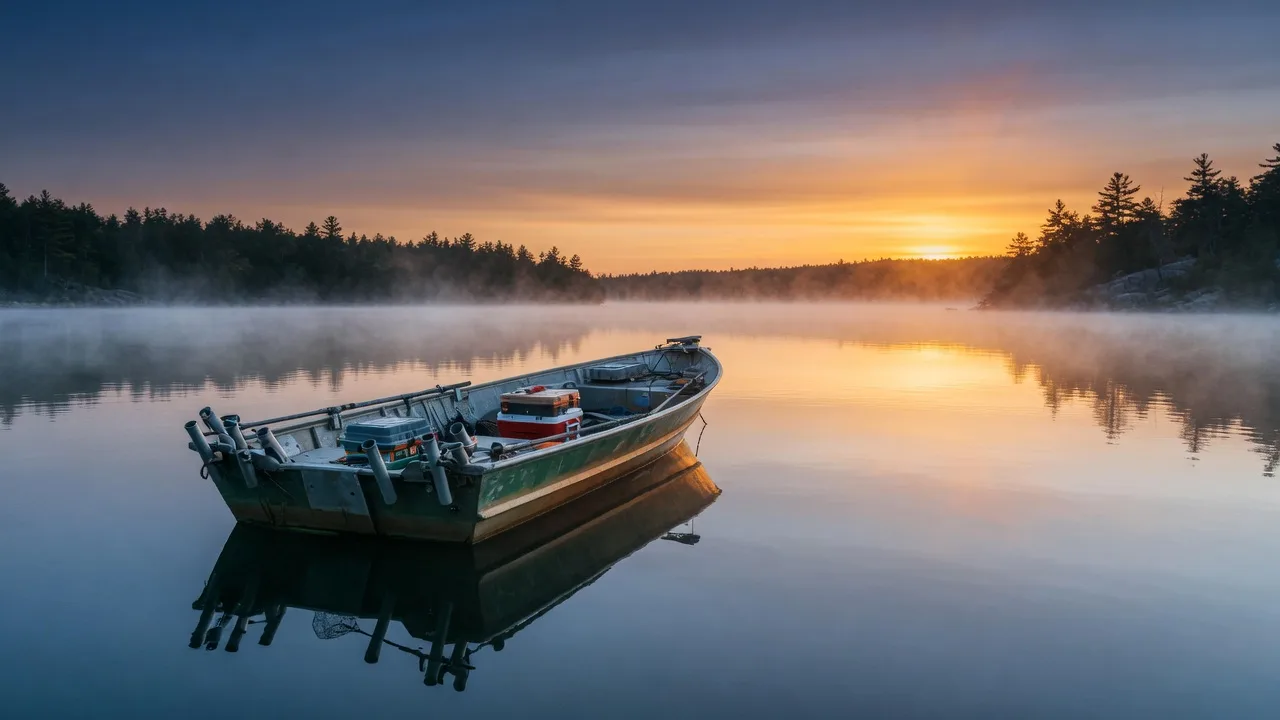
PLATE 01 — Fishing boat with rod holders on calm Gull Lake at sunrise
Living on Gull Lake means living on one of the best fishing lakes in the Brainerd Lakes Area. At roughly 10,000 acres, Gull carries a deep and diverse fishery, with Minnesota DNR surveys documenting nine sport-fish species, and it is stocked regularly with walleye. Whether you fish from your own dock or trail a boat from the launch, here is what you can expect from the water.
What Fish Are in Gull Lake?
The DNR's survey work on Gull Lake has documented nine sport-fish species: walleye, bluegill, crappie, northern pike, yellow perch, largemouth bass, smallmouth bass, muskie, and common carp. That mix is exactly what you want in a lake you plan to fish year after year, because the action rarely depends on a single species. Bass anglers get both largemouth and smallmouth, panfish provide steady action through the summer, and pike and muskie give anglers the big-fish chase.Is Gull Lake a Good Walleye Lake?
Yes, and it has the reputation to prove it. Gull Lake is stocked regularly with walleye and is considered one of the most consistent walleye lakes in Minnesota. Local guides describe walleye holding along weedlines, rock reefs, and sand points in 10 to 18 feet of water, the classic structure that makes the lake fishable for everyone from beginners to tournament regulars.What About Muskie and Bass?
The muskie fishery on Gull is part of a bigger story: Gull shares its muskie population with Pelican Lake and the Whitefish Chain, which means the region functions as one connected big-fish system. For bass, the lake offers both species with healthy populations, giving shore anglers and boaters plenty of room to work. It is a genuine multi-species lake, not a one-trick fishery.When Do Anglers Fish Gull Lake?
Open water runs from ice-out in spring through fall, with walleye active through the classic early-season and fall windows. Ice fishing is a genuine winter tradition on Gull, with the lake's panfish, pike, and walleye keeping the season busy, and the ice access is part of why Gull Lake communities stay alive in January. The seasons stack: spring walleye, summer bass and panfish, fall everything, winter the hardwater crowd.What Does a Great Fishery Mean for Lake-Home Owners?
A fishery like this supports the year-round lifestyle that keeps Gull Lake communities such as East Gull Lake active beyond summer. You can fish from your own dock in July, run the boat to the humps in September, and drill a hole outside the door in January. When the recreation does not stop when the season ends, the community does not either, which is one more reason the lake holds its appeal. Read our look at what living on Gull Lake is really like for the rest of the picture.The Bottom Line
Gull Lake is a serious, consistent, multi-species fishery that fishes well in every season. For dock owners it is a daily amenity; for boaters it is a destination; for the lake-home market it is a big part of why the shoreline holds its value. If fishing is part of your lake plan, Gull should be near the top of your list. Start with our East Gull Lake community guide, compare Gull Lake versus the Whitefish Chain, and schedule a call to talk about fishing lakes and property values. Cheers!Have Questions About Lake Property?
We help buyers and sellers navigate lake-home decisions with clarity and local expertise. Let's talk about your situation.