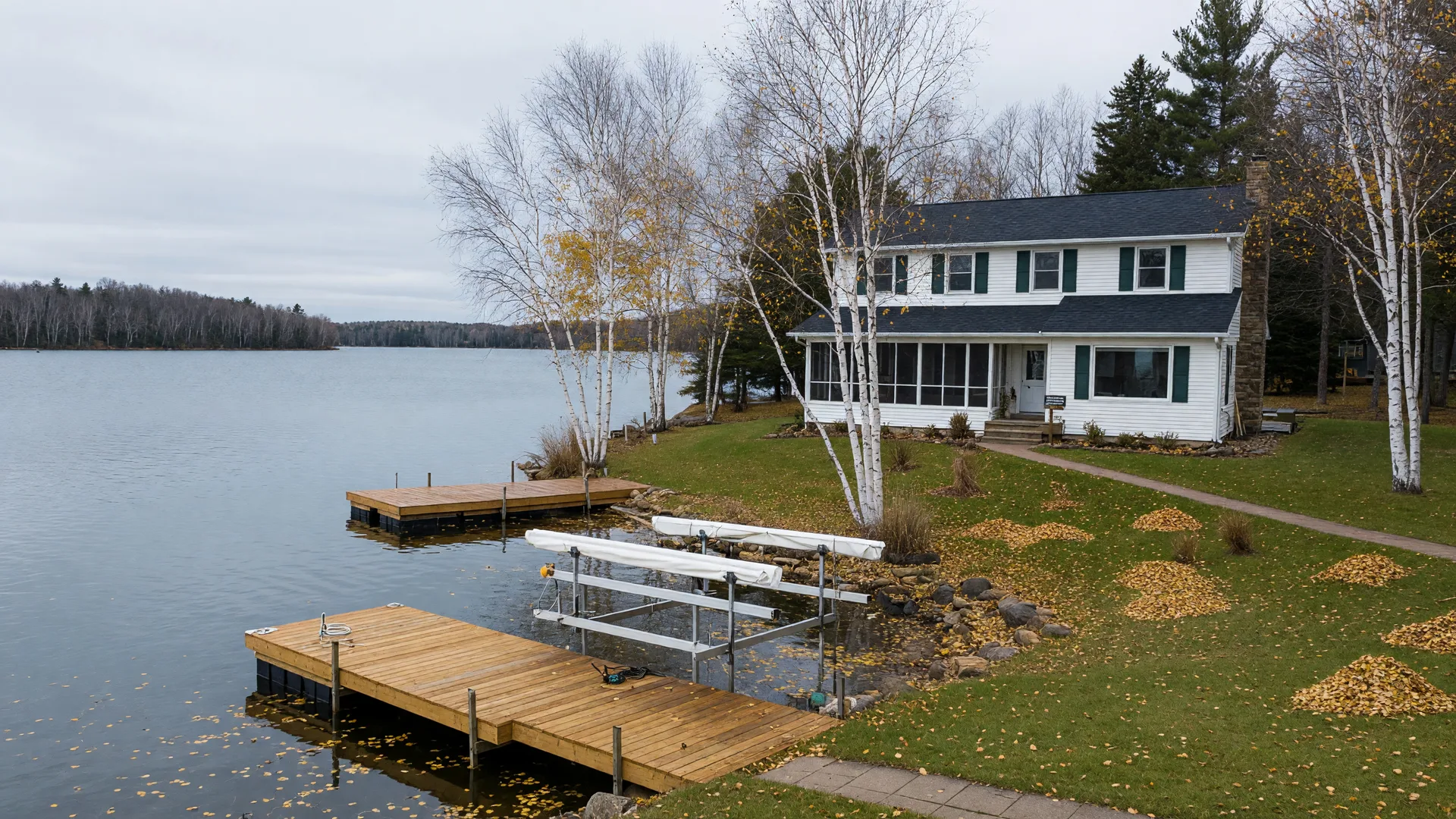
The Dam That Sets Gull Lake's Level: What Shoreline Owners Should Know
Gull Lake's water level is managed by a 1912 Corps of Engineers dam at the outlet. How the dam works, why the level stays steady, and what it means for shoreline owners.

Noah Goedker
Elevate Group · eXp Realty
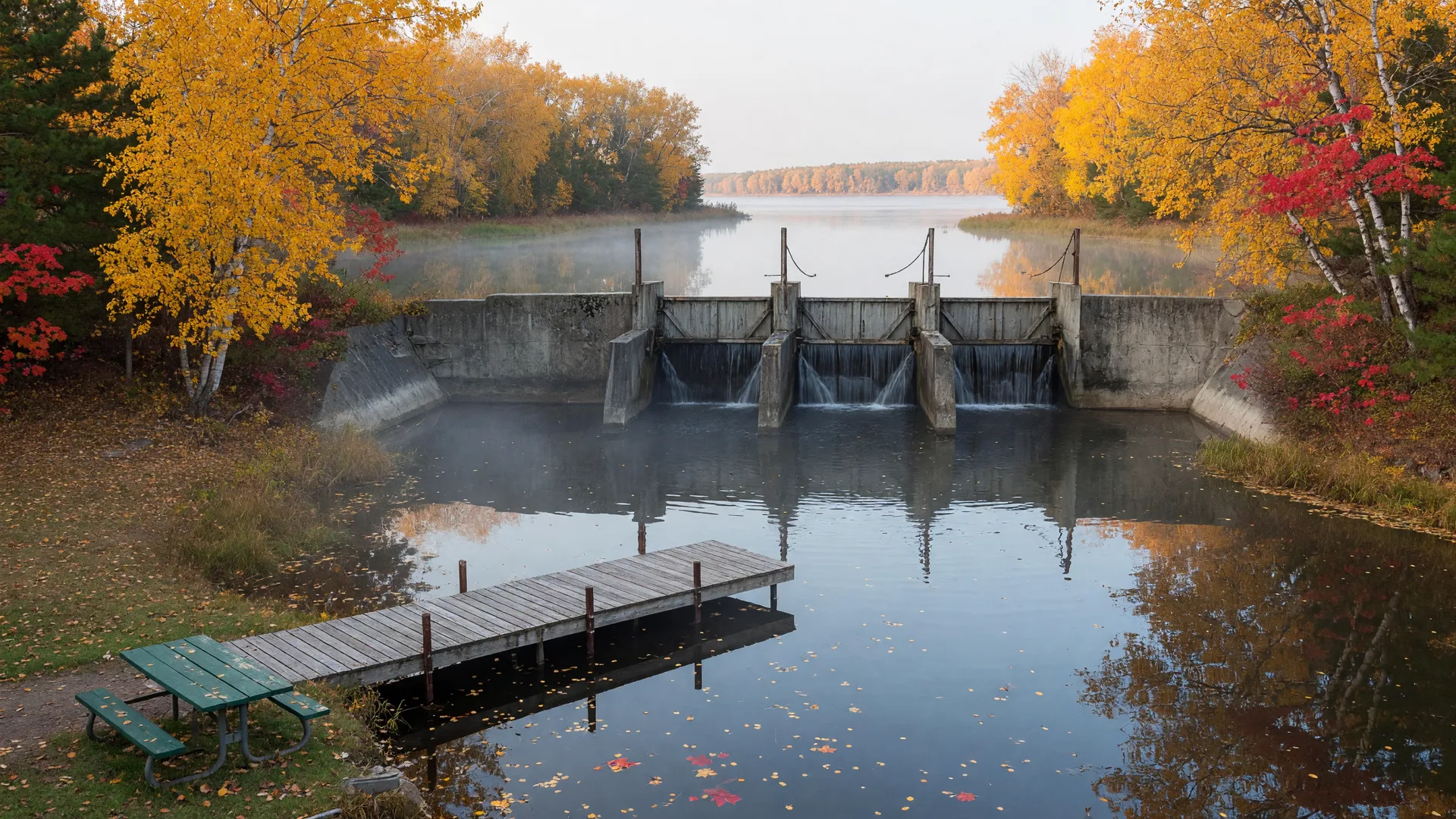
Gull Lake does not have a natural water level; it has a managed one. A U.S. Army Corps of Engineers dam on the Gull River, downstream from the lake's outlet, has controlled the water level since 1912, when it was built as part of the Mississippi River headwaters reservoir system. Building the dam raised Gull Lake about five feet, and today the Corps manages the level within a narrow operating band through the summer. For anyone buying shoreline on Gull, understanding the dam is part of understanding the water itself.
How the Dam Works
The Gull Lake Dam sits on the Gull River roughly a half mile below the outlet of Gull Lake. It was the final dam of the Mississippi River Headwaters Reservoir System, put into service in 1912, and it is operated by the U.S. Army Corps of Engineers, St. Paul District. The structure carries five slide gates, and water is released according to a water control plan that balances recreation, flood control, and fish and wildlife needs. The Corps maintains a minimum downstream release, and releases are set by the plan rather than by public request, which keeps the system predictable.What It Means for Shoreline Owners
Water Levels Are Public Information
The Corps publishes current and historical lake levels and releases for Gull Lake, so owners and buyers can check where the water sits at any time. That transparency is a quiet advantage of buying on a managed lake: you are not guessing about what the water typically does, the record is available.What Buyers Should Consider
The Bottom Line
The 1912 dam at Gull's outlet is old infrastructure that still quietly shapes daily life for everyone on the lake. It keeps the water predictable, protects the shoreline in high-water years, and anchors the public recreation area at the outlet. For shoreline buyers, that stability is part of what makes Gull one of the more dependable lake purchases in the region.If you are looking at Gull Lake shoreline, we can walk through elevation, depth, and how the managed level works for the specific property. Start with what living on Gull shoreline is really like, read more about East Gull Lake, and schedule a conversation when you are ready. Cheers!
Have Questions About Lake Property?
We help buyers and sellers navigate lake-home decisions with clarity and local expertise. Let's talk about your situation.
More from the Blog
What $1 Million Buys You on the Whitefish Chain: A Pricing Reality Check for Fall 2026
Buying a Second Home in the Brainerd Lakes Area: What Twin Cities and Out-of-State Buyers Need to Know